Tag Archives: writing

The working life of an editor – read all about it

Despite the valuable work of editors, they often don’t have a high profile. While newspaper or magazine editors can be well known names, editors who do substantive editing, copyediting and proofreading can be almost invisible. The cover designer of a book may get more recognition than the book’s editor. Editors work closely with authors of both fiction and non-fiction to improve their work to better meet the needs of readers.

To learn more about the working life of an editor, check these four books: three are autobiographies or memoirs and one is a biography.

  • Under Cover (2015) by Craig Munro, editor at University of Queensland Press
  • The Word Detective: A Life in Words (2016) by John Simpson, editor of Oxford English Dictionary
  • The Subversive Copy Editor (2016, 2nd edition) by Carol Fisher Saller, Q&A editor for Chicago Manual of Style at University of Chicago Press
  • Max Perkins: Editor of Genius (1978, re-released 2016) by A. Scott Berg about editor Max Perkins of American publishing house Scribner’s. Winner of the National Book Award for Biography (US), it is the basis of the film Genius (2016) starring Colin Firth.

The end-of-year holidays are a great time for reading (as is the rest of the year). Hope there are books under your Christmas tree which have been carefully edited.
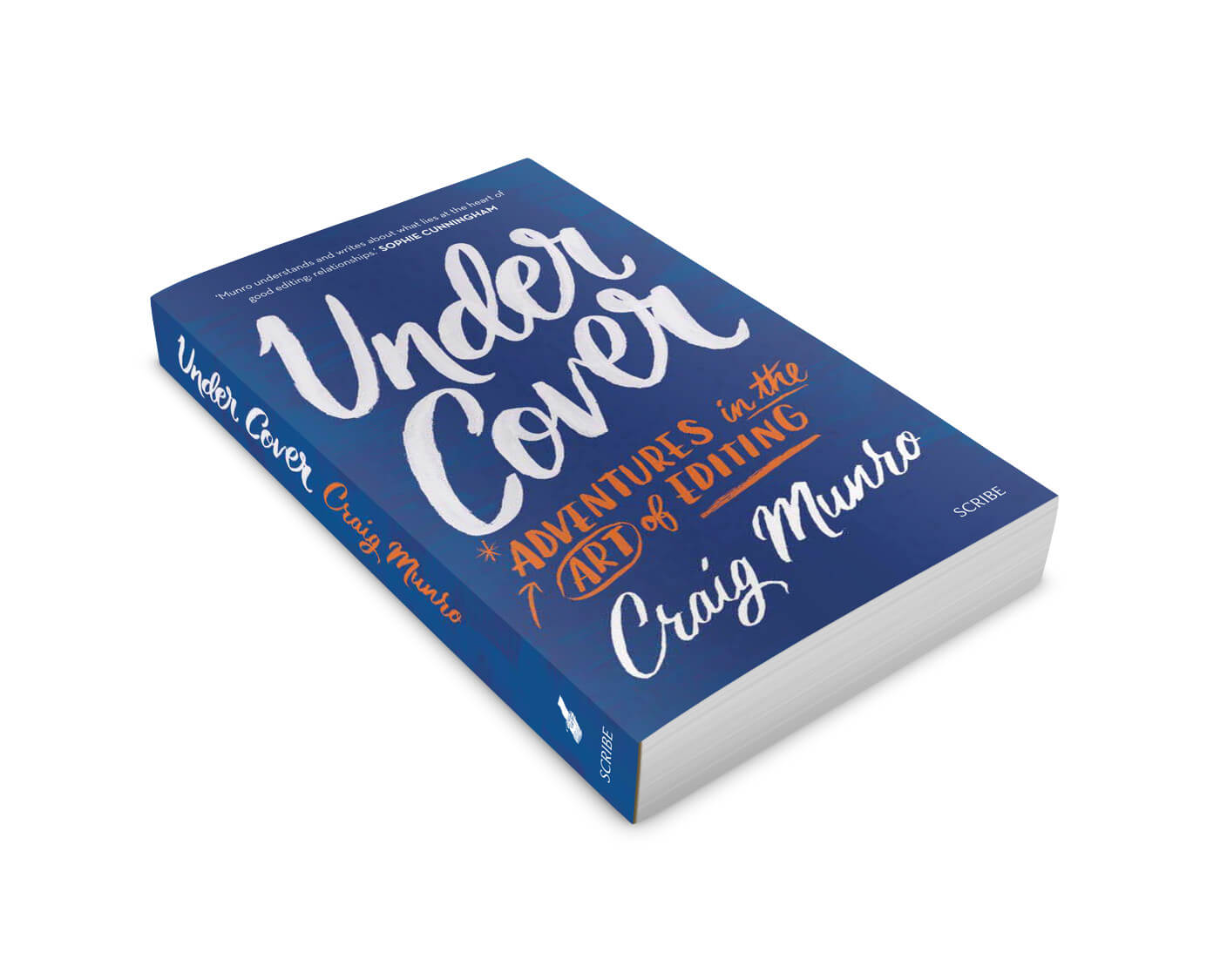
Under Cover
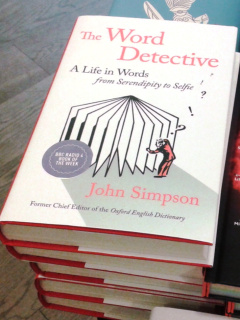
The Word Detective
The Subversive Copy Editor
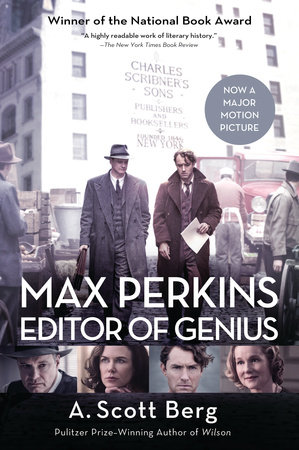
Max Perkins: Editor of Genius
Using reference management software – garbage in, garbage out

Reference management software, such as Endnote or Mendeley, can make wrangling references for a thesis, journal article or research report much easier, but it doesn’t make the reference list perfect. If you make mistakes in data entry, your list will have errors in an example of garbage in, garbage out. Copying reference information from another published source doesn’t mean a reference list will be perfect either, if the original source has errors or missing information.

Common mistakes in data entry of references in software include:

  • entering corporate authors as individuals where the Australian Bureau of Statistics appears as Statistics, A.B. or World Health Organization appears as Organization, W.H. This is also a risk with government departments.
  • entering journal article titles, chapter titles or book titles in an inconsistent mix of lower case and initial capital letters
  • entering dates in a mix of Australian style (1 November 2017) or US style (November 1, 2017)
  • identifying a multi-part surname incorrectly
  • including asterisks or footnotes such as a or b as part of an author surname
  • omitting important information to help identify and find the reference such as publisher, location or volume number.

Many journals have templates available on their websites for authors to download to format references in their reference software according to the journal’s preferred style.

Always look at your software-generated reference list for a final common sense check and see my blog on How to check your own reference list.

For editing and writing inquiries, contact me at rhdaniels@bigpond.com

How to meet journal requirements when writing a paper

For researchers seeking to publish a paper in a journal, it is important to meet the requirements of the target journal. Meeting the requirements can speed up the review process and increase the likelihood of publication.

The first step in meeting the requirements is to find out what they are. Most journals have a website with a section on guidelines for authors which should include information on preparing a paper and the submission process. Read this section carefully. Then read it again. Then follow the guidelines.

As well as the relevance of the paper to the aims of the journal and the types of papers accepted such as empirical research or reviews, the requirements for a specific journal might include:

  • length of the title of the paper
  • length of the abstract
  • maximum total word count of the paper
  • type and format of headings and captions
  • US or British spelling
  • use of footnotes or endnotes (or not).

There may also be guidance on tables and figures such as the format, number allowed, the use of colour, and their location within the text or separately at the end of the paper.

Reference style is particularly important. Check the journal’s preferred reference style and apply it as closely as possible to both the in text references and the reference list. A template for the reference style may be available on the journal’s website to use in reference management software.

Looking at papers that have been published recently in the journal is a good way to check interpretation of the guidelines, including reference style, if insufficient information is provided.

Some journals are more flexible than others in their requirements for initial submission, and many copyedit and format papers to meet their own style once the paper is accepted.

An academic editor can be a second set of eyes to read the guidelines for authors, check the paper meets the guidelines, and advise on and fix any inconsistencies. The aim is to show respect for the journal and make it as easy as possible for the reader, in this case the journal editor and reviewers.

For a success story in meeting the requirements for Nature journal, see my recent blog.

For editing and writing inquiries, contact me at rhdaniels@bigpond.com

“An excellence of editors” – advancing the profession conference

I recently attended my first IPEd national editors conference, held in September in Brisbane. Thanks to the organisers, Editors Queensland, for their great work in producing a program to bring so many editors together from across the country for professional development.

There were several sessions on thesis editing including a workshop, two papers and a panel discussion which I was a member of, as well as informal discussion. There seemed to be agreement on the need to update the IPEd Guidelines for editing research theses, but views on the extent and direction of change varied. See my comments and suggestions to revise the Guidelines to better benefit editors, made to IPEd in November 2016.

Some conference sessions, including my participation in the panel discussion, are available as pay-to-view and conference proceedings will be available later in the year.

There was also much discussion on resources and business practices for freelance editors, some of which I will be including in my workshop on Improve your quoting practices on Friday 10 November 2017 for Editors NSW.

An “excellence” of editors was the winning collective noun chosen by audience acclamation, replacing the previous conference vote for a “cardigan” of editors. Yes, we like to be comfy when concentrating on excellence in editing.

For editing and writing inquiries, contact me at rhdaniels@bigpond.com

Paralysed by perfection and permanence

On a recent project where I was the writer, editor and project manager, I encountered a form of writer’s block and delayed both starting and finalising the project. There was a lot of thinking but it took time to get on the page. This was largely due to the nature of the project – a set of interpretive signs intended to be public, permanent and difficult to change. Of course, I wanted everything to be perfect.

Editors strive to improve text and clearly communicate the right message for the audience. But just as there is not always right and wrong in editing, perfection is not always the right goal. In the end, it was an external funding deadline that prompted progress to completion. The signs are now designed, produced and installed – and I am happy with them.

Be aware of your own possible blocks to writing and editing and think about how to overcome them. Be realistic about what is achievable within a certain time and budget, and given any other priorities.

At the recent workshop I delivered for Editors NSW on the business of being a freelance editor, a thoughtful attendee commented after a packed day of content on business practices that we should “be kind to ourselves”. It was a timely reminder for all about the nature of writing and editing.

Don’t be paralysed by the thought of perfection and permanence:

  • make a start
  • improve it
  • be realistic
  • know when to stop
  • be kind to ourselves.

See my related post on Is there right and wrong in editing?

Please contact me for inquiries about editing on rhdaniels@bigpond.com

Use your table of contents to check consistency of headings

Editors make many choices about style to meet the needs of the audience and the message. While there is not always right and wrong in editing, it is important to be consistent within a document.

A good tool to check consistency of headings throughout a document is the table of contents, which is often generated automatically from the headings used within the document.

Scan through the table of contents and check capitalisation of headings, use of colons or long dashes, use of acronyms, and consistent style, format and level of detail. Check that numbering of headings, whether done manually or automatically, is also consistent.

Check table and figure titles and appendix titles too. Are units of measurement, acronyms, dates or sources used in some titles but not others?

If you spot an inconsistency, change the heading in the body of the document, then re-generate or update the table of contents and check again.

Developing a style sheet is another tool for consistency. Editors use style guides and sheets to ensure consistency in style issues such as spelling, hyphenation, capitalisation, dates and numbers in their editing decisions.

Consistency is part of making it easy for the reader by avoiding distractions.

See my related blogs on:

For editing and writing inquiries, please contact me at rhdaniels@bigpond.com

Australian Manual of Scientific Style

A helpful new resource for writers and editors is the Australian Manual of Scientific Style, known as AMOSS. It is an online only resource for the science writing and editing community released by Biotext.

AMOSS brings together scientific conventions for a wide range of disciplines and aspects of communication. It has been researched, written and tested specifically for an Australian audience of anyone writing, editing or publishing scientific and technical information.

It has four main sections: Writing, Editing, Showing and Resources. Writing covers clear language, types of scientific publications and accessibility. Editing covers the basics, spelling and usage, punctuation, scientific terms, discipline-specific issues and references. Showing covers tables, figures, images, infographics and other visual information. Resources has international standards and resources, and Australian conventions and resources.

Throughout AMOSS, there are lots of examples, and tips such as ‘Did you know?’, ‘Caution’, ‘Reminder’ and ‘How to’. It also has a search function, bookmarks and downloadable, printable quick guides.

AMOSS is available at www.sciencestyle.com.au by annual subscription which is $60 for an individual. There is a discount price of $50 for IPEd members who need to login to the members’ section of the IPEd website for the code. Organisation subscriptions are also available. For more information, email amoss@sciencestyle.com.au

For editing and writing inquiries, contact me at rhdaniels@bigpond.com

Is writing your new year’s resolution?

This is the time of year when many people think about what they want to achieve over the next 12 months. For some people, that goal involves writing. It might be a fiction or non-fiction book, thesis, family history, memoir or other piece of writing. A large piece of writing can be daunting which makes it hard to even get started.

Here are some tips.

  • Think about the overall structure.
  • Break the task into smaller pieces of writing.
  • Set deadlines for each piece of writing.
  • Learn how to use features of Word for long documents.
  • Remember the tip: What I really want to say is…
  • Make a start and fix it up later.
  • Join a local writing group for support.

If you want to write, but don’t know what to write about, think about your passions and what interests you. It is always easy to write with passion.

An editor can help you at several stages of your writing, from the initial planning to the finishing touches. An editor can help structure and organise your writing at the beginning, and also copy edit your writing to ensure consistency and clear communication, whatever your audience and message.

For editing and writing inquiries, contact Right with Rhonda at rhdaniels@bigpond.com

What’s the purpose of grammar?

A recent Editors NSW workshop on grammar with presenter Elizabeth Manning Murphy DE was a reminder about the purpose of grammar. Grammar is the communication code we all share and it helps us communicate clearly in writing and in speech. It is just as important for new media such as emails and websites as the old media of printed letters. It improves understanding, ensures clarity and reduces confusion.

Formally teaching and learning grammar did go out of fashion for a time, so it is common for people to be unsure of the right uses of grammar or think something looks odd without being able to explain why.

Some grammar tips

  • Understand grammar conventions before breaking them for effective writing.
  • Be aware of the different parts of speech such as nouns, pronouns, verbs, adjectives, adverbs, prepositions and conjunctions.
  • Be aware of common mistakes and look out for them.
  • Find a grammar reference book that is useful for you.
  • Remember English is a living language and conventions change over time.

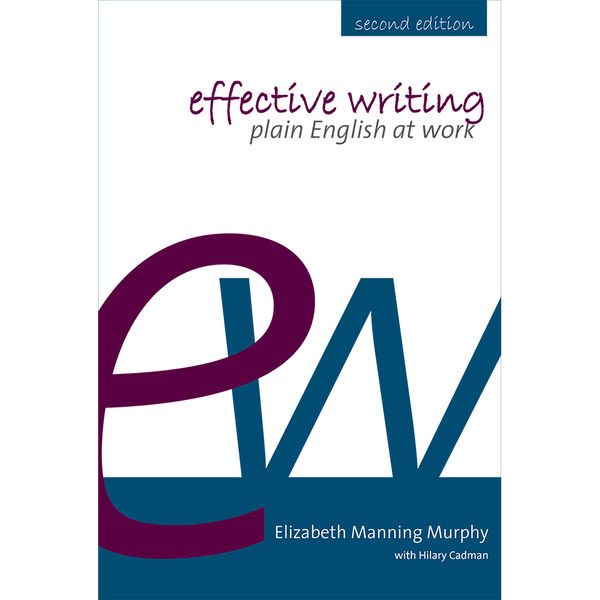
Elizabeth’s book Effective Writing: Plain English at Work is a great easy to read resource. It emphasises that grammar is the basis for plain English style which is recommended for government and business communication.

Effective writing: plain English at work by Elizabeth Manning Murphy

Effective writing: plain English at work by Elizabeth Manning Murphy

The Style Manual for Authors, Editors and Printers is a comprehensive resource on many aspects of writing and editing (see my blog here).

For editing queries, please contact me at rhdaniels@bigpond.com

Know your audience and write for them

This week I came across a journal with a very specific title: The International Journal of the First Year in Higher Education. This title is very clear. It communicates what the journal is about, what content to expect and who the audience is, even without reading its blurb.

Just to confirm, the blurb at www.fyhejournal.com says the journal “focuses on research and practice about enhancing the experience of commencing students” and the journal’s audiences are “academic and professional staff involved in first year programs as well as senior managers with responsibility for first year policies and strategies”.

It is a good reminder to know your audience and write for them, which includes:

  • getting the title right
  • getting the content right
  • getting the structure right
  • getting the language right.

For more, see my blogs Write for your reader and audience and Are your headings helpful?

But wait. In August 2015, the journal was renamed to Student Success: A journal exploring the experiences of students in tertiary education to broaden the focus from First Year to a wider view of student engagement and success in tertiary education.

What do you think of the name change?